Contents
Featured Article: DNA Shearing

AFA Process for DNA and RNA Shearing
Adaptive Focused Acoustics® (AFA®) technology is firmly established as the fragmentation method of choice for NGS, and Covaris continues to innovate the tools required to shear DNA and RNA without GC bias or thermal damage.
The Covaris AFA process is conducted under isothermal conditions, ensuring the integrity of the nucleic acid sample is maintained and providing high recovery of double-stranded DNA during the shearing process.
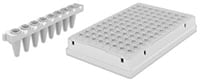
Combined with the specifically engineered AFA Tubes, it is possible to precisely and accurately fragment DNA and RNA to the 100 – 1500bp range (microTUBE). Focused-ultrasonicators range from low to high throughput, including automation-friendly options.
Complete your workflow with Covaris truCOVER® WGS Library Prep Kits or truCOVER Total RNA Library Prep Kits for a fully integrated library prep solution that improves sequencing efficiency and data quality.
Want to learn more about how shearing with AFA can improve your results? Contact us now!
What are the benefits of AFA Technology for DNA and RNA Shearing?
Physical shearing of DNA or RNA using Covaris AFA is concentration independent, isothermal, and highly reproducible. Physical shearing does not require a cleanup step after shearing, thereby preserving the complexity of the sample for library preparation. This shearing method provides unmatched control and reproducibility of shearing.
| FEATURE | BENEFIT |
| Temperature Controlled | Processing at controlled temperatures provides highest yields while preserving sample fidelity |
| Accurate and precise | Highly reproducible process, day to day, user to user. Protocols can be transferred instrument to instrument without further optimization |
| Non-contact, closed vessel | No cross-contamination, clean-up, or sample loss |
| Versatile | Generate tight fragment distribution centered from 100 bp to 20 kbp |
DNA Shearing of Laboratory Samples

Unparalleled acoustic energy control enables shearing across a wide range of fragment sizes, ranging from 150 bp to 5 kb. AFA-energetics is the gold standard for DNA shearing, providing you with highest sample complexity and unbiased sample yield to pave the way for the most cost-effective library prep.
RNA Shearing

Total RNA sheared with Covaris AFA from FFPE samples. These electropherograms show unbiased RNA fragment size distribution.
Total mRNA Shearing

Agilent BioAnalyzer electropherogram of 5 µg of mRNA processed in a volume of 130 µl of TE in a microTUBE according to the operating conditions, showing the mean fragment size at 200 bases.
Comparison of DNA Shearing Fragment Sizes
| Fragment Size* | Sample Volume | Covaris Products |
| 175 to 1.5 kbp | 5 to 50 µl | AFA-TUBE |
| 150 to 1.5 kbp | 130 µl | microTUBE-130 |
| 150 to 1.5 kbp | 55 µl | microTUBE-50 |
| 150 to 1.5 kbp | 15 µl | microTUBE-15 |
| 6 – 20 kb | 150 µl | g-TUBE |